
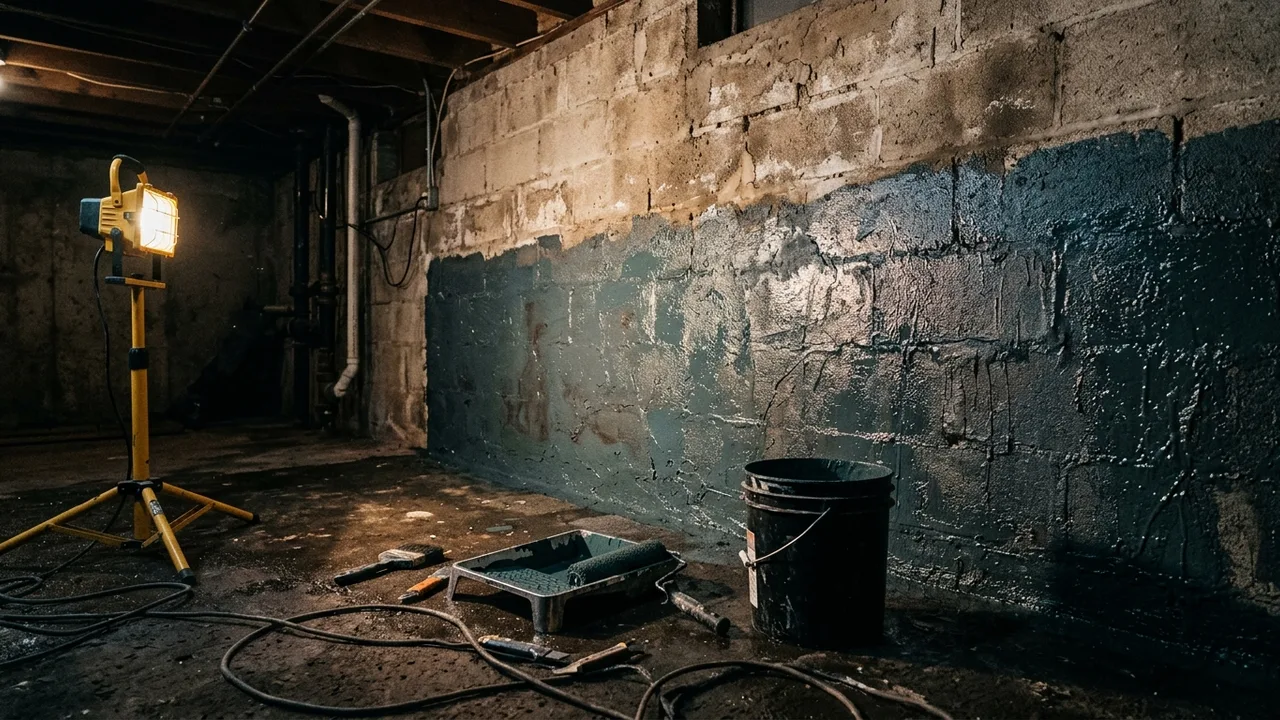
Basement Waterproofing work in Adelaide

Basement Waterproofing Adelaide

Basements and cellars below ground are exposed to hydrostatic pressure, groundwater and seasonal damp. Waterproofing keeps stored items, machinery and living spaces dry.

Efflorescence and hydrostatic pressure signs

Look for damp or stained walls, white salt deposits, musty odours, pooled water after rain, and peeling paint. These symptoms mean water is finding a way through.

Negative-side tanking and membrane systems

Below-ground waterproofing can include negative-side tanking, positive-side membranes, drainage channels, sump pumps and crack injection. The right system depends on the water source and construction.

Rising damp on sloping sites

Suburbs such as Magill, Burnside and Campbelltown sit on sloping sites with clay soils. Seasonal runoff can push water against basement and retaining walls.

What to expect during basement waterproofing

Basement jobs usually start with identifying where the water is entering. The contractor may recommend internal drainage, a sump pump, negative-side tanking or external excavation depending on the construction and the source of the water. Access, soil type and the presence of utilities all affect the scope and cost.

Warranty and aftercare

Basement systems are covered by a workmanship warranty that reflects the scope installed. Keep sump pumps and drainage outlets clear, monitor for new cracks after heavy rain, and service mechanical components according to the contractor's advice.

When basement waterproofing needs drainage, not just a membrane

A membrane alone cannot stop water that is under hydrostatic pressure. If groundwater builds up against the wall, a drainage channel, sump pump or positive-side system may be needed. The contractor will recommend the right combination based on where the water is coming from and how the building is constructed.

Basement waterproofing and Adelaide's winter rainfall

Adelaide's wet winter months concentrate groundwater recharge. Basements and cellars that seem dry in summer can show damp or pooling after sustained rain. A waterproofing system designed for the actual groundwater behaviour, not just surface damp, gives reliable year-round protection.

Basement waterproofing costs in Adelaide

Basement waterproofing can range from a targeted internal repair to a full tanking and drainage system. A simple crack injection or localised tanking may cost a few thousand dollars, while a comprehensive system with a sump pump and drainage can be significantly more. Site access, wall construction, soil type and the extent of water entry all influence the final quote.

Dry out your basement

Explain the damp or water entry and a licensed contractor will specify tanking, drainage or crack-injection works.

Request a free inspection

Tell us about your project

Share the details and we will help you take the next step with confidence.

Optional - it helps us point your enquiry the right way.

Your details are only used to arrange your basement waterproofing enquiry. See our Privacy policy.

Basement Waterproofing FAQs

Do you service the Adelaide Hills?
This Adelaide waterproofing service focuses on metropolitan Adelaide and nearby suburbs. Hills properties with basement, cellar or retaining-wall issues can usually be assessed, although steep access and groundwater conditions may affect scope and cost.
How much does waterproofing cost in Adelaide?
Most Adelaide waterproofing projects range from $800 for a small shower reseal up to $5,000-$12,000 for a full balcony or basement membrane replacement. Bathroom waterproofing typically falls between $1,500 and $4,500 depending on size, access and whether tiles need to be removed. Coastal suburbs such as Glenelg and Henley Beach can run 10-15% higher because salt-laden air accelerates membrane degradation and specialist trade availability is tighter.
Are epoxy coatings the same as waterproofing?
Epoxy floor coatings provide a hard, impermeable surface layer and can resist light moisture, but they are not a structural waterproofing system for hydrostatic pressure or continuous water exposure. For basements and retaining walls, a dedicated membrane and drainage system is usually needed.
How do I know if my basement needs waterproofing?
Signs include damp or stained walls, musty odours, efflorescence (white powder) on concrete, pooled water after rain, and peeling paint. In Adelaide's older Hills and inner suburbs, seasonal groundwater can push against basement walls and force water through cracks.
What happens after I submit an enquiry?
Your enquiry is reviewed and a licensed waterproofing contractor in the network contacts you to arrange a site inspection. After the inspection you receive a written quote, scope and warranty terms. There is no obligation to proceed.

Basement Waterproofing across Adelaide

Find basement and cellar waterproofing notes for Adelaide suburbs, or submit the form to discuss tanking and drainage.

Basement Waterproofing in Adelaide CBD mixes heritage terraces, modern apartments and commercial buildings. Waterproofing demand spans unit balconies, basement car parks and renovated wet areas in older stock. Basement Waterproofing in Norwood Leafy streets are lined with heritage villas and character homes. Many bathrooms and laundries still sit on original tile beds that need modern membrane reinstatement. Basement Waterproofing in Prospect Blends character cottages with newer infill development. Renovations and additions create frequent wet-area waterproofing needs, especially in older bathroom retrofits. Basement Waterproofing in Unley Is an established inner-south suburb with Federation and inter-war homes. Mature gardens and clay soils can direct groundwater toward foundations and basements. Basement Waterproofing in Glenelg Coastal location means salt-laden air and strong UV accelerate membrane ageing on balconies, terraces and roof decks. Apartment stock is significant. Basement Waterproofing in North Adelaide Heritage terraces and villas often have original wet areas that need careful waterproofing during renovation. Proximity to parklands can also raise local groundwater. Basement Waterproofing in Magill Sits at the Adelaide foothills fringe. Larger blocks and sloping sites create retaining-wall and basement waterproofing demand, while older homes need bathroom upgrades. Basement Waterproofing in Henley Beach Coastal environment stresses waterproofing systems with salt, wind and UV. Tiled balconies and outdoor showers are common failure points. Basement Waterproofing in Burnside Eastern foothills setting brings seasonal runoff and clay soils. Established homes with older wet areas and underground spaces benefit from modern membrane solutions. Basement Waterproofing in Campbelltown Post-war housing stock and split-level foothills blocks create both renovation wet-area work and retaining-wall waterproofing needs. Basement Waterproofing in Fullarton Inner-south-east location features character homes and steady renovation activity. Bathrooms, laundries and outdoor entertaining areas are common waterproofing focus areas. Basement Waterproofing in Goodwood Character cottages and narrow blocks mean wet-area renovations must fit tight spaces. Heritage overlays also influence how bathroom upgrades are approached. Basement Waterproofing in Mile End Mix of industrial and residential uses includes older homes undergoing modernisation and commercial properties needing membrane maintenance. Basement Waterproofing in Plympton Inner-south-west location has a mix of post-war homes and newer units. Balconies, bathrooms and rising-damp issues are common enquiries. Basement Waterproofing in Semaphore Coastal heritage streets and foreshore exposure mean salt, sand and UV are constant threats to outdoor membranes and flashings.

See all locations ->